Level to the last fraction
An alignment lift that is slightly out of level gives slightly wrong numbers, so leveling is checked more than once and again after the first loaded lift.
Sample project
A tire and alignment shop added a four-post drive-on lift so it could stop sending alignment work down the street. A look at what it takes to get one right.
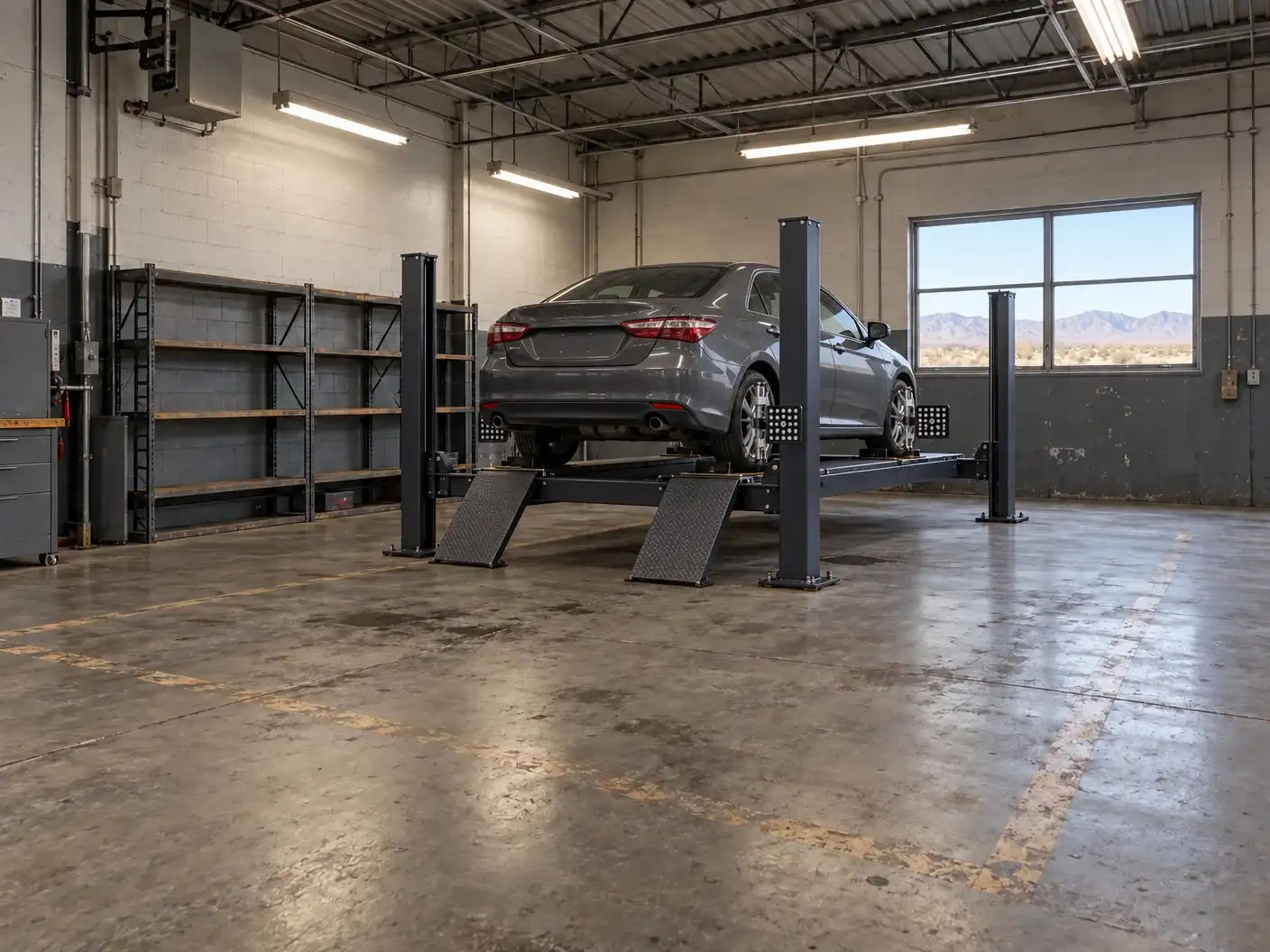
The shop sold a lot of tires but sent every alignment elsewhere. A four-post drive-on lift lets a vehicle roll straight on and sit level, which is what an alignment needs.
An alignment lift has a tougher job than an ordinary lift: the runways have to be level to a very small tolerance, or the readings on the alignment machine will be wrong from the start.
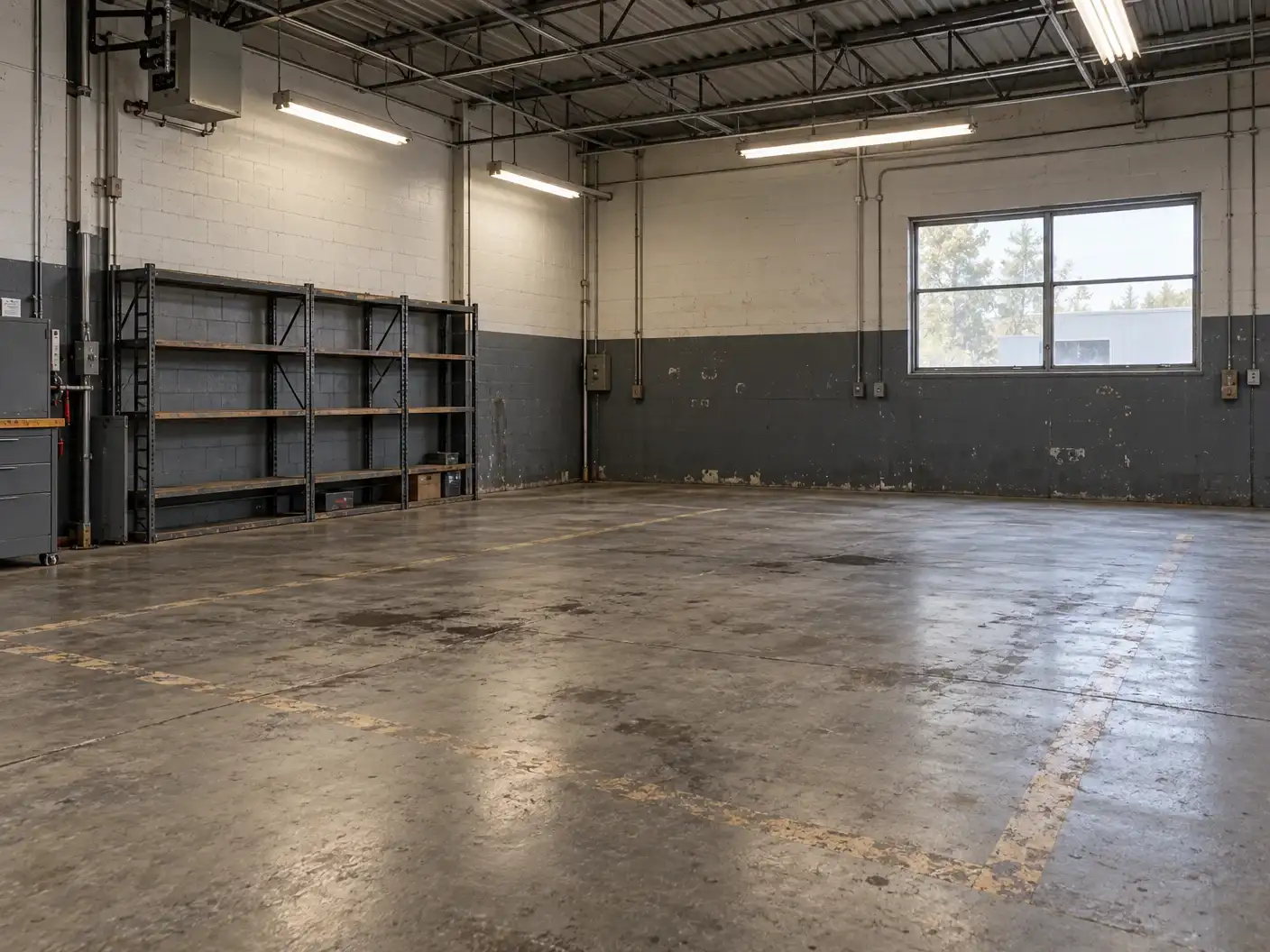
We check the slab and measure how level the install area is. Manufacturers state how much variation in the floor they allow, and some allow only fractions of an inch side to side.
The posts go up, the crossmembers and runways are set, and the lifting cables are routed and adjusted.
Some manufacturers require the four posts to be anchored and others only recommend it, and anchoring can affect the lift's certification. We follow the instructions for the model being installed.
Using a level, and for alignment lifts often a transit with a target at each corner, we shim until the runways are level and the safety locks all engage together.
The front turn plates and the rear slip plates are set so the wheels can pivot and move freely while the alignment is adjusted.
The lift is connected to its dedicated power supply, cycled empty, and then tested with a vehicle before handover.
An alignment lift that is slightly out of level gives slightly wrong numbers, so leveling is checked more than once and again after the first loaded lift.
Posts that sit on a sloping or uneven slab need shims, and past a certain amount the better answer is to correct the floor itself.
A drive-on lift needs room in front and behind, and the ceiling must clear the tallest vehicle at full height. We check both before the order is placed.
The shop now keeps its alignment work in house. Like any lift, it should have a periodic inspection by a qualified lift inspector at least annually, and we booked the first one before leaving.
Specifications vary by lift model and manufacturer. We always work from the manufacturer's installation instructions.
Tap a photo to enlarge it.
A sample project written for this demo. The shop, timeline and details are illustrative and will be replaced with real jobs. AI-generated sample images for this demo, to be replaced with photos of our own installs.
Tell us about your shop and we will recommend the right setup.
Or call (915) 307-4297