Pressure lost in the pipe
Piping that is too small, or too long, loses pressure before the air reaches the tool. A well-designed system loses only a small fraction of the pressure between the tank and the point of use.
Sample project
Pressure drops, wet air and a noisy compressor in the middle of the shop. A new compressor room fixed all three and gave every bay steady, clean air.
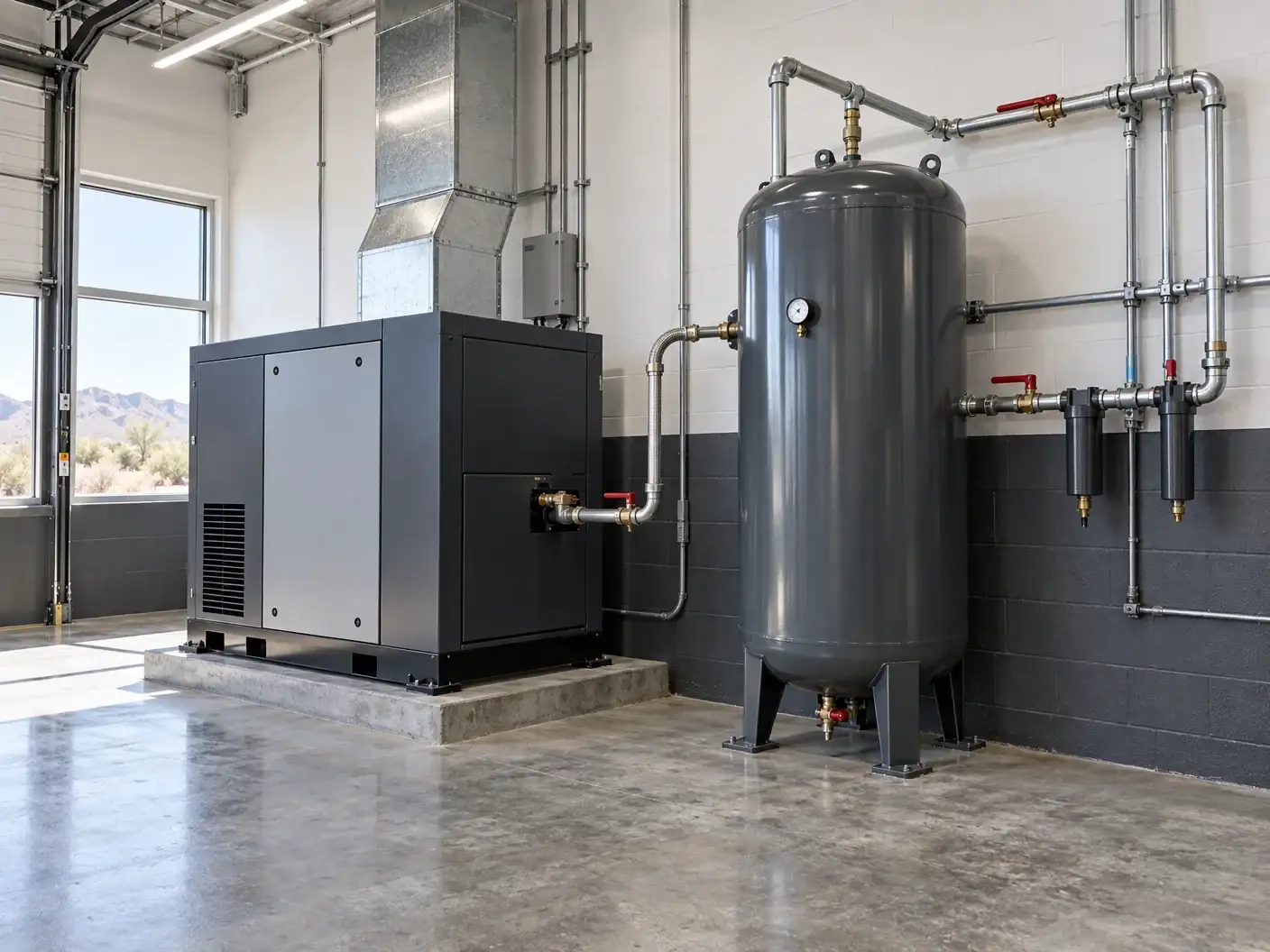
The shop's compressor lived in a corner of the bay, loud and hot, and the air at the far bays was weak and wet. Tools slowed down and moisture caused trouble in air tools and paint.
The goal was to move the compressed air out of the working area into its own room, and to pipe it so every bay gets the pressure it needs.
We look at which air tools run, how many at once, and how the shop will grow, then choose a compressor type and size. Two common types are rotary screw and piston compressors; which fits depends on how much air is used and for how long.
A compressor puts out a lot of heat and needs cool, clean air to breathe, so the room is planned with ventilation, and with the intake and exhaust air kept from recirculating.
The tank is fitted with a visible pressure gauge, a spring-loaded safety valve, and a drain at its lowest point. No valve is ever placed between the tank and its safety valve.
A refrigerated dryer removes moisture so water does not travel down the lines, with filters ahead of and behind it.
We run piping rated for compressed air, labeled as such, in a loop where possible, and sloped to drop legs and drain points so water has somewhere to go. Drops with shutoff valves serve each bay.
We check for leaks, set the pressure, and measure the pressure at the far end of the shop.
Piping that is too small, or too long, loses pressure before the air reaches the tool. A well-designed system loses only a small fraction of the pressure between the tank and the point of use.
Compressed air carries moisture. Dryers, slope, drains and drops taken off the top of the pipe keep it from reaching the tools.
A compressor room that cannot shed heat makes the compressor work harder and shortens its life.
The shop is quieter, the air is dry, and the far bay now matches the near one. The tank drain and filters are on a simple maintenance schedule so it stays that way.
Specifications vary by lift model and manufacturer. We always work from the manufacturer's installation instructions.
Tap a photo to enlarge it.
A sample project written for this demo. The shop, timeline and details are illustrative and will be replaced with real jobs. AI-generated sample images for this demo, to be replaced with photos of our own installs.
Tell us about your shop and we will recommend the right setup.
Or call (915) 307-4297